Violence Against Emergency Workers on the Rise Worldwide: Overcrowding Identified as a Major Driver
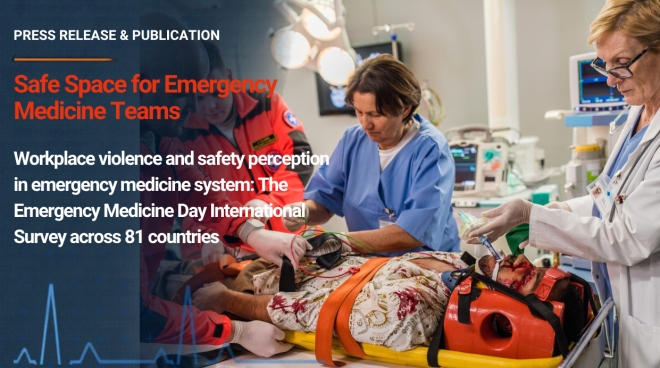
New international survey across 81 countries reveals the scale of violence faced by emergency healthcare professionals, with experts calling for urgent action to improve safety and reduce overcrowding.

The European Society for Emergency Medicine (EUSEM) has highlighted alarming new findings showing that violence against emergency healthcare workers is a growing global crisis. Results from the Emergency Medicine Day International Survey, presented during a special session at the EUSEM 2026 Congress in Paris and simultaneously published in the European Journal of Emergency Medicine, reveal that three-quarters of emergency healthcare professionals witnessed workplace violence in the past year.

The survey, conducted by the EUSEM Emergency Medicine Day Working Group, gathered responses from 1,306 healthcare providers across 81 countries between May and June 2026. The findings paint a concerning picture of the daily reality faced by emergency medicine teams worldwide.

Violence Affecting Healthcare Workers and Patient Care

According to the survey, 75.5% of respondents reported witnessing violence in their workplace during the previous year. Nearly seven in ten (68.8%) experienced psychological harm, while 40.3% reported physical harm.

Importantly, workplace violence is affecting not only healthcare workers themselves but also the care delivered to patients. Almost half of respondents (45.8%) believed that violence had a direct negative impact on the quality of care they were able to provide.

Professor Luis García-Castrillo, retired Professor of Emergency Medicine at Hospital Universitario Marqués de Valdecilla in Santander, Spain, who presented the findings at the congress, stressed the far-reaching consequences of violence in emergency settings.

“Workplace violence not only jeopardises the physical and mental health of healthcare professionals but also negatively impacts the quality of care they provide. The survey reveals that 45.8% of respondents thought that the quality of care was diminished as a result of the violence they encountered.”

Verbal Abuse Most Common Form of Violence

Verbal aggression was by far the most frequently reported form of violence, affecting 87.8% of respondents. Other forms included:

  • Physical assault (42.3%)
  • Property damage (26.4%)
  • Sexual harassment (14.6%)
  • Race-related violence (14.5%)
  • Armed conflict (4.5%)
  • Weapon-related incidents (4.1%)
  • Sexual assault (3.5%)
  • Cyber harassment (3.1%)
  • Firearms incidents (2.9%)

Patients were identified as the primary perpetrators (67.6%), followed by relatives and friends (44.1%). Alcohol or drug intoxication was involved in 44% of incidents, while psychiatric patients accounted for 35.2%.

Nearly half of respondents (48.3%) believed workplace violence had worsened over the past five years.

Women Disproportionately Affected

The survey also highlighted important gender differences. Women were significantly more likely than men to report psychological victimisation, with 72.2% of female respondents affected compared with 40.4% of male respondents.

Dr Roberta Petrino, Director of the Emergency Department at Ente Ospedaliero Cantonale in Lugano, Switzerland, and first author of the study, emphasised the particular challenges faced by women working in emergency medicine.

“The major problem for women working in emergency medicine is verbal violence. This can include insults, sexual references, gender-related harassment and discrimination. Women emergency workers are subjected to this far more than men, and it has mainly psychological consequences.”

She noted that respondents consistently called for stronger psychological support services, improved prevention strategies and safer working environments.

Emergency Departments Struggle with Everyday Violence

One of the most striking findings from the survey was the perception that emergency services are better prepared for major incidents than for routine violence.

“Respondents thought the emergency services were more prepared for a mass casualty event than for everyday violence,” said Dr Petrino.

Only 51.1% of participants reported receiving formal violence-prevention training, while 38.6% had received none. Although 57.3% had access to psychosocial support following violent incidents, more than a quarter (27.1%) reported having no access to such services.

Overcrowding and Long Waiting Times Escalate Tensions

The study's authors identified hospital overcrowding as a critical factor contributing to violence in emergency departments.

Long waiting times, stretched resources and the emotional stress experienced by patients, relatives and healthcare professionals can all increase frustration and aggression. The authors argue that violence prevention must therefore include organisational solutions, not only security measures.

Dr Petrino called on healthcare leaders and policy-makers to improve patient flow, reduce emergency department overcrowding, invest in well-designed and adequately staffed facilities, and ensure rapid transfer of patients to appropriate hospital wards.

She also recommended expanded staff training in communication and de-escalation techniques, along with enhanced security measures such as surveillance systems and dedicated security personnel.

A Global Challenge Requiring Global Action

The authors conclude that violence against emergency healthcare workers is a worldwide issue requiring urgent attention from healthcare organisations, hospital managers and policy-makers.

The survey's broad international reach, including responses from 81 countries and significant participation from healthcare professionals working in conflict-affected regions such as Ukraine, highlights the universal nature of the challenge.

As emergency departments continue to manage increasing demand and mounting pressures, EUSEM is calling for coordinated action to create safer working environments for healthcare professionals and to protect the quality of patient care.

Study: Workplace violence and safety perception in emergency medicine system: the Emergency Medicine Day International Survey across 81 countries
Authors: Roberta Petrino et al.
Published in: European Journal of Emergency Medicine
DOI: 10.1097/MEJ.0000000000001375

Read paper here

Funding: The study received no external funding.

Read more...

EUSEM Welcomes Professor Christoph Dodt as New President

The European Society for Emergency Medicine (EUSEM) is pleased to announce that Professor Christoph Dodt has officially assumed the role of President of EUSEM, succeeding Dr Robert Leach following two years of dedicated leadership.

In his inaugural address to the EUSEM community, Professor Christoph Dodt expressed his gratitude for the trust placed in him and outlined a presidency focused on listening, collaboration, innovation, and strengthening the future of emergency medicine across Europe.

A Presidency Built on Listening and Supporting Members

Addressing the EUSEM membership, Professor Christoph Dodt emphasised that emergency medicine occupies a unique position at the heart of healthcare, constantly reflecting the challenges and changes affecting health systems worldwide. He reaffirmed his commitment to ensuring that EUSEM remains a platform where emergency physicians can come together to share knowledge, exchange experiences, and develop solutions to common challenges.

A central theme of his presidency will be maintaining close engagement with members across Europe.

“You can expect me to remain curious and to listen to you,” he told members, pledging to support member-led initiatives and foster an environment where strong ideas can flourish.

Empowering the Next Generation

Professor Christoph Dodt highlighted the importance of broad representation within the specialty, committing EUSEM to champion gender balance and increase opportunities for emerging leaders. Young emergency physicians and women in emergency medicine will remain key priorities during his term.

This vision aligns closely with EUSEM’s ongoing efforts to strengthen leadership development, education, and professional opportunities for the next generation of emergency medicine professionals across Europe.

Addressing the Major Challenges Facing Emergency Medicine

Looking ahead, the new President outlined several critical challenges that will shape emergency medicine in the coming years. These include climate change, digitalisation and artificial intelligence, financial constraints, demographic shifts, and the need to develop resilient emergency care infrastructure.

Under his leadership, EUSEM aims to bring emergency physicians together to create sustainable strategies that not only respond to today's realities but also prepare the specialty for future demands.

Advancing Professionalism and Excellence

A further priority for Professor Christoph Dodt is supporting the continued development of emergency medicine as a recognised and highly professional specialty throughout Europe. He reaffirmed EUSEM’s commitment to delivering world-class education, scientific exchange, and cutting-edge research through its congresses, symposia, and educational programmes.

Strengthening EUSEM for the Future

The new President also identified organisational sustainability as an immediate priority, noting that he will begin his term by addressing key internal challenges, including the stabilisation of EUSEM’s finances in collaboration with the Society’s leadership and office team.

Tribute to Outgoing President Dr Robert Leach

In closing, Professor Christoph Dodt paid tribute to Dr Robert Leach for his leadership over the past two years. He praised Dr Leach’s ability to build relationships and strengthen EUSEM’s international profile through collaboration with organisations such as the WHO, the European Union and NATO, and expressed his appreciation that Dr Leach will continue to support the Society during the transition period

As EUSEM enters this new chapter, members can look forward to a presidency focused on inclusivity, innovation, sustainability, and strengthening emergency medicine across Europe. Guided by a spirit of collaboration and a commitment to supporting the emergency medicine community, Professor Christoph Dodt begins his journey as EUSEM President with a clear vision for the future.

Read full speech here.

Read more...

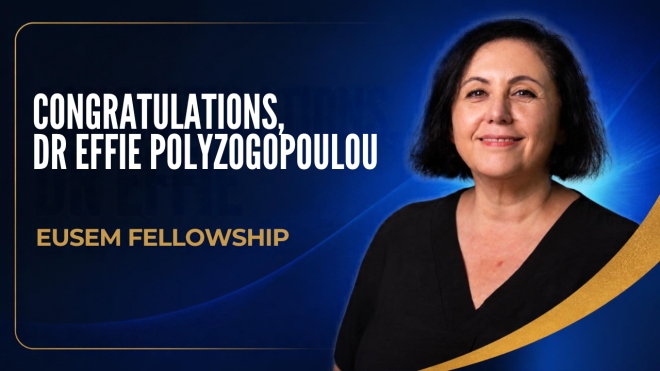
Congratulations to Dr Effie Polyzogopoulou on Receiving the EUSEM Fellowship

The European Society for Emergency Medicine (EUSEM) is delighted to congratulate Dr Effie Polyzogopoulou, Chair of the EUSEM Ultrasound Section and Associate Professor of Emergency Medicine at the National and Kapodistrian University of Athens, on being awarded the prestigious EUSEM Fellowship.

This distinction recognises Dr Polyzogopoulou’s outstanding contributions to emergency medicine, her dedication to advancing point-of-care ultrasound, and her commitment to education, research, and professional development within the European emergency medicine community.

Over the years, Dr Polyzogopoulou has played a leading role in promoting the integration of ultrasound into everyday emergency care, helping to enhance diagnostic accuracy, patient safety, and clinical decision-making. Through her leadership of the EUSEM Ultrasound Section, she has been instrumental in fostering collaboration, supporting educational initiatives, and advancing the dissemination of ultrasound knowledge across Europe.

As an Associate Professor of Emergency Medicine at the National and Kapodistrian University of Athens, she has demonstrated an unwavering commitment to training the next generation of emergency physicians while contributing significantly to academic research and innovation in the field.

The award of EUSEM Fellowship is a well-deserved recognition of her professional excellence, leadership, and sustained service to emergency medicine. Her achievements continue to inspire colleagues and trainees alike, and her work has had a lasting impact on the growth and development of emergency medicine both nationally and internationally.

On behalf of the EUSEM community, we extend our warmest congratulations to Dr Polyzogopoulou on this remarkable achievement and wish her continued success in her future endeavours.

Congratulations, Dr Effie Polyzogopoulou, on becoming a EUSEM Fellow!

Read more...

EUSEM Leadership Team Re-Elected to Continue Driving the Society Forward

The European Society for Emergency Medicine (EUSEM) is delighted to announce the re-election of three highly valued members of its Executive Committee, reflecting the confidence of the membership in their leadership and dedication to advancing emergency medicine across Europe.

We warmly congratulate:

  • Dr Niccolò Parri on his re-election as Vice President
  • Dr Tatjana Rajkovic on her re-election as Honorary Secretary
  • Prof. Diana Cimpoeșu on her re-election as Honorary Treasurer

Their re-election ensures continuity within the EUSEM leadership team at an important time for the Society, as it continues to expand its educational activities, strengthen its advocacy efforts, support emergency physicians across Europe, and prepare the specialty for future challenges.

Over the past years, all three officers have made significant contributions to EUSEM's growth and development. Their commitment, expertise, and collaborative spirit have helped strengthen the Society's governance, support its members, and advance the mission of promoting excellence in emergency medicine throughout Europe.

Together with newly elected President Professor Christoph Dodt, the re-elected officers will help guide EUSEM through the next chapter of its development. The leadership team is united in its commitment to fostering innovation, supporting the next generation of emergency physicians, promoting gender balance and inclusivity, and ensuring that EUSEM remains the leading European forum for education, research, collaboration, and professional development in emergency medicine.

On behalf of the entire EUSEM community, we extend our sincere congratulations to Dr Niccolò Parri, Dr Tatjana Rajkovic, and Prof. Diana Cimpoeșu, and we look forward to their continued leadership and service in the years ahead.

Congratulations and thank you for your ongoing dedication to EUSEM and the emergency medicine community across Europe.

Read more...

Press release: Nasal spray brings pain relief for children treated in the emergency department

Paris, France: A treatment for pain, that is delivered via a nasal spray, offers an effective, needle-free option for children being seen in the emergency department for a range of injuries, according to research presented at the European Emergency Medicine Congress today (Sunday) [1].

Researchers say that reducing pain quickly and effectively is especially important for children in the emergency department, yet there are currently very few treatment options available.

The research was presented by Professor Shammi Ramlakhan, an emergency medicine consultant working at Sheffield Children's Hospital, the University of Sheffield and Sheffield Hallam University in the UK.

He said: “Pain in children remains under-recognised and under-treated. Nearly a third of children with moderate to severe pain do not receive adequate pain relief within the 15 to 20 minutes recommended in international guidance. In this study we explored whether a combination of analgesic medication given in a simple dosing system would help provide quick and effective pain relief for children being treated in the emergency department.”

The research included 152 children aged between one and 17 with moderate to severe pain who were being treated at one of seven hospital emergency departments in the UK and Spain between May 2024 and May 2025 [2]. The majority had limb injuries, such as fractures and dislocations, while other children had burns or soft tissue injuries.

All children were given a combination of two pain relief medications, sufentanil and ketamine, via a nasal spray. The dose was adjusted according to the weight of each child by the number of puffs of the nasal spray. Children were assessed 15 minutes after being given the treatment and again after 30 minutes. The researchers used standard assessments to check how much pain children were in and to look for any side effects of the treatment.

After 15 minutes, more than half of the children (54%) were in less pain and after 30 minutes most of the children (88%) children were in less pain. Pain was reduced by around half in the majority of children (86.2%) 30 minutes after treatment. Side effects were mild and included nausea or vomiting, dizziness and nasal itching

Professor Ramlakhan said: “Our research shows that this drug can provide rapid and meaningful pain relief for children being treated in the emergency department. Children tolerated the nose spray well with no major side effects. This is good news for children and their families. This also gives doctors a simple and effective option for treating their patients where very few options currently exist.”

The nasal spray was being tested for the European Medicines Agency (EMA)’s paediatric-use marketing authorisation (PUMA) scheme, which aims to encourage manufacturers to develop and

adapt medications specifically for children. Researchers say the treatment should be available for use in Europe in the near future.

Dr Maša Sorić is a member of the EUSEM abstract selection committee. She is head of the emergency department at University Hospital Merkur, Zagreb, Croatia, and was not involved with the research. She said: “Across Europe, we see millions of children in the emergency department every year. Many of these will be suffering painful injuries. Being in hospital can also be frightening for children and their families.

“This study assesses a nasal spray containing two existing types of pain relief with a very simple dosing system. The results suggest it helps to reduce pain quickly and effectively, without the need for an injection. The treatment did not cause too much drowsiness, and the side effects were mild.

“As doctors we want to give our patients effective treatments, and that includes treatment to reduce any pain they are suffering. However, the pain relief options that are currently available for children are limited at the moment, so we really need more treatments like this in the emergency department.”

(ends)

[1] Abstract no: OA099, “Efficacy, Safety and Satisfaction of a Fixed-dose Combination of Intranasal Sufentanil-ketamine (in SUF/kKET) in the Treatment of Acute Pain in Children in the Emergency Department” by Shammi Ramlakhan, Pain Management abstracts session, Sunday 27 September, 14.00-15.30 hrs CEST, Room 152.

[2] Sheffield Children’s Hospital; Birmingham Women's and Children's NHS Foundation Trust, and Royal London Hospital in the UK; and Hospital General Universitario Dr. Balmis, Alicante; Hospital Sant Joan de Deu, Barcelona; Universidad Autonoma de Madrid - Hospital Universitario La Paz (HULP), Madrid; and Complejo Hospitalario Universitario de Santiago, Santiago de Compostela, in Spain.

Funding: This study was funded by Cessatech.

Read more...

Press Release: Blood test shows whether newborns with fever have bacterial or viral infection

Press Release: Blood test shows whether newborns with fever have bacterial or viral infection

Paris, France: A test that compares the levels of two molecules in the blood is able to accurately distinguish between bacterial and viral infections in newborn babies with fever in a small study presented at the European Emergency Medicine Congress today (Sunday) [1].

A fever in a baby under three months of age is considered a medical emergency, because in very young babies with undeveloped immune systems, an infection can quickly become life threatening.

However, in the emergency department, staff need to assess babies with fever to distinguish the most serious bacterial infections that require antibiotics from viral infection that typically pass with monitoring and care.

The new research was presented by Dr Tommaso Bellini, a paediatric emergency physician at the IRCCS Istituto Giannina Gaslini in Genoa, Italy. He said: “In very young babies with fever, distinguishing serious bacterial infection from self-limiting viral illness is a major diagnostic dilemma. Our standard biomarkers can help show when there might be a bacterial infection, but they also create ‘false positives’, which drives overtreatment. This can mean unnecessary lumbar punctures, antibiotics, and hospital admissions for infants who turn out to have only a virus.”

The research involved 60 babies who were brought to the paediatric emergency department of IRCCS Istituto Giannina Gaslini. Some were being assessed and treated for fever, while others were being assessed and treated for other, non-infectious conditions.

Dr Bellini and his colleagues collected blood samples from all the babies. They tested the blood samples with flow cytometry – an advanced technique that allows researchers to study the characteristics of individual cells.

They used this technique to quantify the levels of two molecules that are known to increase in response to infections. One of these, called CD64, is found on the surface of neutrophils, a type of white blood cell, and is thought to increase in response to bacterial infection. The other, called CD169, is found on the surface of another type of white blood cell, called a monocyte, and is thought to increase in response to a viral infection.

The researchers combined measurements of both these molecules into a ratio for each baby. A ratio is a simple way of comparing the amount of one thing with the amount of another. They found that this ratio could accurately distinguish between babies with no infection (average ratio score of 1.10), babies who were ultimately confirmed to have a viral infection (average 0.33) and babies confirmed to have a bacterial infection (average 16.22).

The test had a ‘sensitivity’ of 100%, meaning it correctly picked up all the cases of bacterial infection and a ‘specificity’ of 96.6%, meaning that the rate of ‘false positives’ (where the test suggested a baby had a bacterial infection when they did not) was extremely low.

Dr Bellini said: “These two marker molecules show opposite signatures – during a viral infection one is high while the other is low, and during a bacterial infection the reverse is true. Combining them into a single ratio separated bacterial from non-bacterial infection with very high accuracy in our initial cohort of 60 babies.

“This assessment is currently run on flow cytometry, which needs specialised equipment and trained staff. It is not yet a bedside test, and not widely available outside of specialist labs. Translating it into a fast, low-cost, point-of-care format is our next research goal.”

The research is continuing and will ultimately include data on 75 babies. Dr Bellini and his colleagues are also beginning a larger study called DISCERN (Discriminating Infection via Surface CD-marker Expression Ratios iN infancy). This is a multicentre, prospective study assessing the accuracy of the test in 300 to 500 babies.

Dr Maša Sorić is a member of the EUSEM abstract selection committee. She is head of the emergency department at University Hospital Merkur, Zagreb, Croatia, and was not involved with the research. She said: “For parents, taking a very young baby with a fever into the emergency department can be a very worrying time. We have to treat every case as potentially serious until we know otherwise. At the moment, this can mean invasive tests, treatment with antibiotics and spending a long time in hospital. This is a small study, but the findings are very positive. If these results can be reinforced in a larger trial, they could mean that we have a much better way of knowing which babies probably have a bacterial infection that needs antibiotics, and which babies probably do not. This could ultimately improve treatment and reduce the need for unnecessary treatment.

“There is also a broader issue with bacteria becoming resistant to antibiotics, partly as a result of over-use of these treatments. If we can ensure we only use antibiotics when they are needed, we may also reduce the growth of antibiotic resistance, helping to maintain the effectiveness of these vital medicines.”

(ends)

[1] Abstract no: OA091, “CD64 and CD169 as Translational Biomarkers for Early Bacterial-viral Discrimination in Febrile Infants ≤90 Days” by Tommaso Bellini, Oral abstract session: Paediatric abstracts session, Sunday 27 September, 11.00-12.30 hrs CEST, Room 142.

Funding: No external funding. The study was conducted as part of Dr Bellinin’s doctoral research at the University of Genova (DINOGMI).

Read more...