

North Macedonia Strengthens Emergency Medicine Reform with Support from EUSEM

Skopje, North Macedonia – The Minister of Health of North Macedonia, Sasho Klekovski, has reaffirmed the government's commitment to strengthening emergency medical services following a high-level meeting with representatives of the European and Macedonian emergency medicine communities.
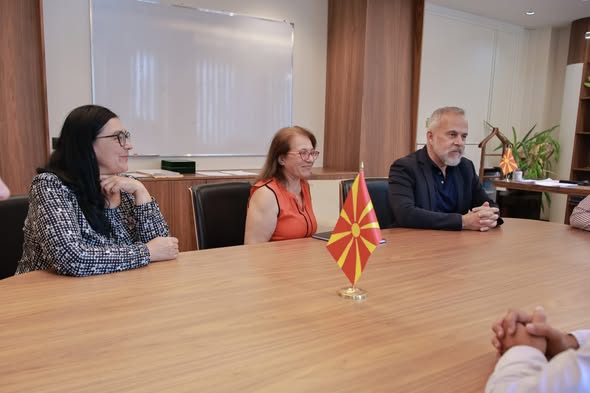
The meeting brought together leaders from the European Society for Emergency Medicine (EUSEM) and the newly established Macedonian Association for Emergency Medicine (MZUM). Delegations were led by EUSEM President Dr Robert Leach and MZUM President Dr Vesna Krstevska.
During the discussions, Minister Klekovski outlined a series of ambitious reforms aimed at modernising North Macedonia's emergency care system and improving access to timely, high-quality emergency medical services across the country.
Among the key initiatives presented were plans to establish the Skopje Emergency Medical Service as a separate organisational unit, distinct from the existing Skopje Health Centre structure. The reform programme also envisages the introduction of a modern emergency medical services model incorporating paramedics, bringing North Macedonia closer to internationally recognised standards of emergency care.
The Ministry further announced plans for a major investment in emergency medical transport infrastructure, including the procurement of 100 new emergency vehicles, followed by an additional 50 vehicles in a second phase. These investments are intended to strengthen response capacity and improve patient access to emergency services throughout the country.
Another priority highlighted during the meeting was the reorganisation of the Emergency Centre at the Mother Teresa Clinical Centre in Skopje. The proposed changes aim to enhance patient flow, improve coordination of emergency services and support more effective delivery of acute care.
Minister Klekovski also noted that the Ministry is examining international best practices as part of the reform process. This includes studying the Slovenian model, which features a national dispatch centre, and the Romanian model, known for its specialised emergency medical services. Consideration is also being given to the development of services that currently remain outside the formal emergency care system, including mountain rescue capabilities.
Representatives of EUSEM expressed their willingness to support the ongoing reform efforts and welcomed the establishment of the Macedonian Association for Emergency Medicine. The meeting highlighted opportunities for future cooperation in areas such as professional development, standards of care, training and system development.
Commenting on the discussions, Minister Klekovski thanked both organisations for their engagement and commitment to advancing emergency medicine in North Macedonia.
"Emergency medicine is the front line of the health system, and these reforms are measured in saved lives," he said.
The meeting marks an important step in strengthening collaboration between national and European emergency medicine leaders and demonstrates a shared commitment to improving emergency care for patients across North Macedonia.
https://www.facebook.com/share/19Wc6RQmW8/?mibextid=wwXIfr