

Violence Against Emergency Workers on the Rise Worldwide: Overcrowding Identified as a Major Driver
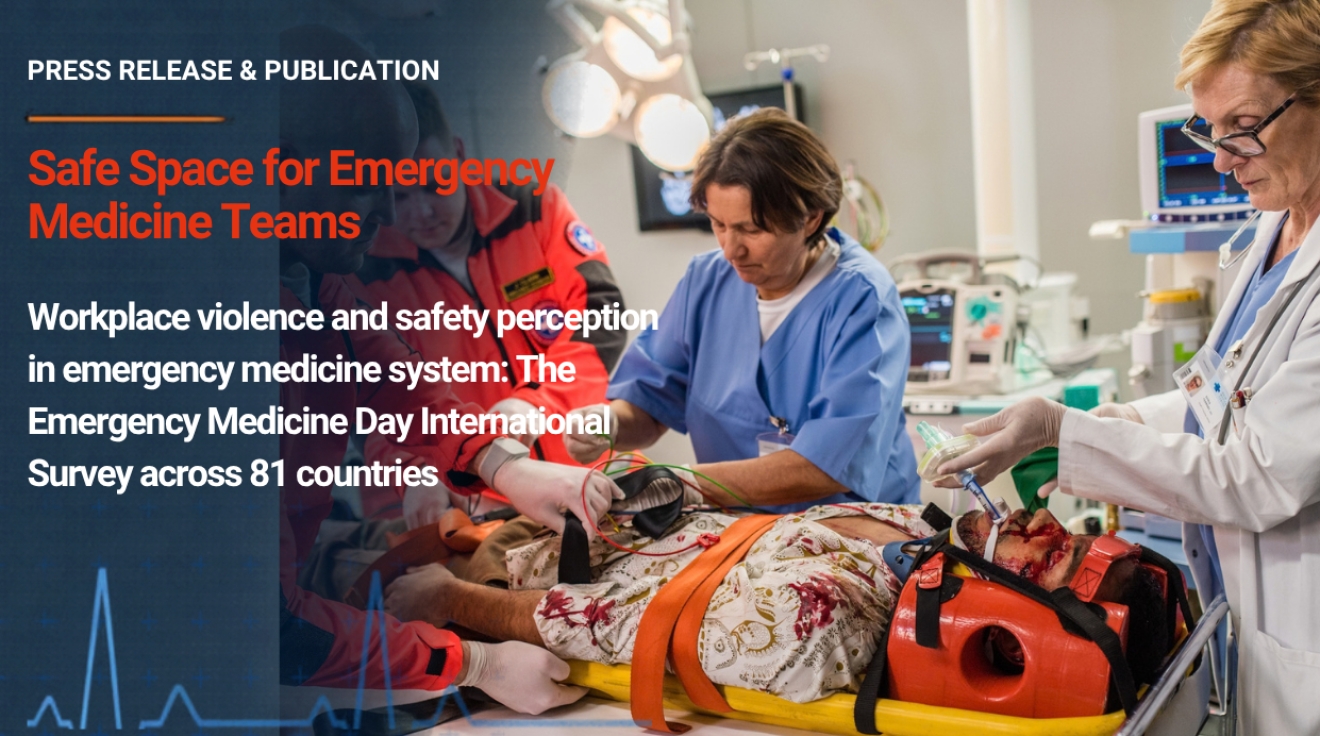
New international survey across 81 countries reveals the scale of violence faced by emergency healthcare professionals, with experts calling for urgent action to improve safety and reduce overcrowding.
The European Society for Emergency Medicine (EUSEM) has highlighted alarming new findings showing that violence against emergency healthcare workers is a growing global crisis. Results from the Emergency Medicine Day International Survey, presented during a special session at the EUSEM 2026 Congress in Paris and simultaneously published in the European Journal of Emergency Medicine, reveal that three-quarters of emergency healthcare professionals witnessed workplace violence in the past year.
The survey, conducted by the EUSEM Emergency Medicine Day Working Group, gathered responses from 1,306 healthcare providers across 81 countries between May and June 2026. The findings paint a concerning picture of the daily reality faced by emergency medicine teams worldwide.
Violence Affecting Healthcare Workers and Patient Care
According to the survey, 75.5% of respondents reported witnessing violence in their workplace during the previous year. Nearly seven in ten (68.8%) experienced psychological harm, while 40.3% reported physical harm.
Importantly, workplace violence is affecting not only healthcare workers themselves but also the care delivered to patients. Almost half of respondents (45.8%) believed that violence had a direct negative impact on the quality of care they were able to provide.
Professor Luis García-Castrillo, retired Professor of Emergency Medicine at Hospital Universitario Marqués de Valdecilla in Santander, Spain, who presented the findings at the congress, stressed the far-reaching consequences of violence in emergency settings.
“Workplace violence not only jeopardises the physical and mental health of healthcare professionals but also negatively impacts the quality of care they provide. The survey reveals that 45.8% of respondents thought that the quality of care was diminished as a result of the violence they encountered.”
Verbal Abuse Most Common Form of Violence
Verbal aggression was by far the most frequently reported form of violence, affecting 87.8% of respondents. Other forms included:
- Physical assault (42.3%)
- Property damage (26.4%)
- Sexual harassment (14.6%)
- Race-related violence (14.5%)
- Armed conflict (4.5%)
- Weapon-related incidents (4.1%)
- Sexual assault (3.5%)
- Cyber harassment (3.1%)
- Firearms incidents (2.9%)
Patients were identified as the primary perpetrators (67.6%), followed by relatives and friends (44.1%). Alcohol or drug intoxication was involved in 44% of incidents, while psychiatric patients accounted for 35.2%.
Nearly half of respondents (48.3%) believed workplace violence had worsened over the past five years.
Women Disproportionately Affected
The survey also highlighted important gender differences. Women were significantly more likely than men to report psychological victimisation, with 72.2% of female respondents affected compared with 40.4% of male respondents.
Dr Roberta Petrino, Director of the Emergency Department at Ente Ospedaliero Cantonale in Lugano, Switzerland, and first author of the study, emphasised the particular challenges faced by women working in emergency medicine.
“The major problem for women working in emergency medicine is verbal violence. This can include insults, sexual references, gender-related harassment and discrimination. Women emergency workers are subjected to this far more than men, and it has mainly psychological consequences.”
She noted that respondents consistently called for stronger psychological support services, improved prevention strategies and safer working environments.
Emergency Departments Struggle with Everyday Violence
One of the most striking findings from the survey was the perception that emergency services are better prepared for major incidents than for routine violence.
“Respondents thought the emergency services were more prepared for a mass casualty event than for everyday violence,” said Dr Petrino.
Only 51.1% of participants reported receiving formal violence-prevention training, while 38.6% had received none. Although 57.3% had access to psychosocial support following violent incidents, more than a quarter (27.1%) reported having no access to such services.
Overcrowding and Long Waiting Times Escalate Tensions
The study's authors identified hospital overcrowding as a critical factor contributing to violence in emergency departments.
Long waiting times, stretched resources and the emotional stress experienced by patients, relatives and healthcare professionals can all increase frustration and aggression. The authors argue that violence prevention must therefore include organisational solutions, not only security measures.
Dr Petrino called on healthcare leaders and policy-makers to improve patient flow, reduce emergency department overcrowding, invest in well-designed and adequately staffed facilities, and ensure rapid transfer of patients to appropriate hospital wards.
She also recommended expanded staff training in communication and de-escalation techniques, along with enhanced security measures such as surveillance systems and dedicated security personnel.
A Global Challenge Requiring Global Action
The authors conclude that violence against emergency healthcare workers is a worldwide issue requiring urgent attention from healthcare organisations, hospital managers and policy-makers.
The survey's broad international reach, including responses from 81 countries and significant participation from healthcare professionals working in conflict-affected regions such as Ukraine, highlights the universal nature of the challenge.
As emergency departments continue to manage increasing demand and mounting pressures, EUSEM is calling for coordinated action to create safer working environments for healthcare professionals and to protect the quality of patient care.
Study: Workplace violence and safety perception in emergency medicine system: the Emergency Medicine Day International Survey across 81 countries
Authors: Roberta Petrino et al.
Published in: European Journal of Emergency Medicine
DOI: 10.1097/MEJ.0000000000001375
Read paper here
Funding: The study received no external funding.